Wardogs Season 2 Rain Changes Everything
Want articles like this for your own video to promote it on YouTube and Google? Order them through the Telegram bot @sat_sit_bot. It writes articles around your video, embeds the video and publishes them on popular niche websites (no ads). Try it free: 50 articles on us.
· based on the channel shroud
Key takeaways
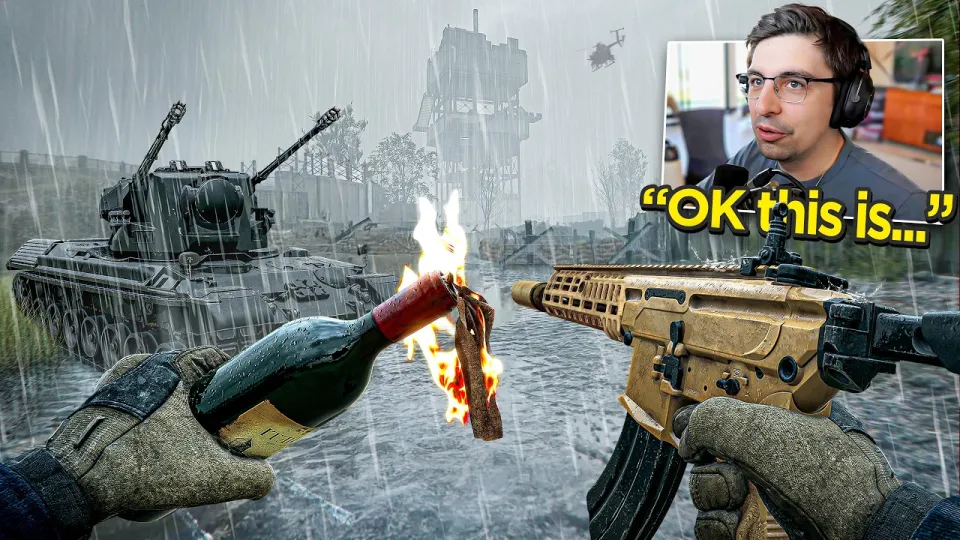
- Wardogs Season 2 introduces dynamic heavy rain as a match-wide weather condition.
- Rain cuts effective sightlines to roughly 190 meters, making long-range sniping unreliable.
- Thermal and infrared optics gain value in rain because they cut through the haze.
- HP ammunition aimed at the legs is the counter to armored opponents in close fights.
- A 20-player blue group coordinating in one voice channel outnumbers a six-player squad.
Wardogs in Season 2 is a different game because of one addition: heavy rain. The new weather system drops visibility, mutes long sightlines and forces fights into close range, so the same map plays out with different routes, different weapons and different priorities. If you want the extended discussion that inspired this breakdown, the shroud podcast is available on Spotify, where the crew talks through the season's changes.
What the Wardogs rain actually changes
The rain is not a cosmetic filter; it is a visibility tax on every engagement. Players report that even around 190 meters it becomes hard to see a target, which effectively deletes the long-range sniper role on open ground. Rain streaks on glass, whether a helicopter windshield or a window frame, add another layer of obstruction that punishes players who hold static angles.
The practical consequences stack up quickly:
- Sightlines compress. Fights that used to start at 250–300 meters now start inside 100 meters or not at all.
- Sound matters more. With vision degraded, footsteps, reloads and callouts become the primary information source.
- Rotations slow down. Squads move building to building instead of crossing open fields, which concentrates traffic in a handful of compounds.
- Optics shift in value. Infrared and thermal goggles cut through rain haze, so they become a bigger upgrade than before.
Why the map feels new in Wardogs Season 2
A familiar location becomes unfamiliar when you approach it from a different direction. One squad described fighting for their lives in the south tower of Ozeti under constant raids, then pushing slightly northwest and suddenly recognizing the bridge as "that part of the map" — a landmark they had never reached from that angle. Rain-driven routing does exactly that: it forces players off the roads they know and onto paths they have never used.
This is also why the season feels bigger than a weather patch. When sniping is gutted, the players who relied on it must learn close-quarters entries, and the players who already played close range get more fights on their terms. The rain gives the game "so much more room for different players," as one viewer put it, because it rewards a different skill set than the previous meta.
Close-range fights and the leg-shot problem
Armor changes the math of every close fight, and the rain pushes almost every fight into that range. The recurring lesson from the footage is simple: against a heavily armored target, center-mass fire with the wrong ammunition does almost nothing, and the fix is HP rounds aimed at the legs.
The failure pattern is consistent and worth studying:
- A player is told to shoot legs and confirms the instruction.
- They then fire at the torso and head anyway, see the target survive, and conclude the weapon is bad.
- The actual issue is ammunition choice and hit location, not the gun's damage values.
A PP-19 loaded with HP rounds is a completely different weapon from one firing standard ammunition, and players who did not realize the submachine gun had HP rounds available lost fights they should have won. Before blaming a weapon, check the magazine: armor penetration and hit zone decide the outcome, not the name on the gun.
Squad size, comms and base building
Numbers decide fights when visibility is low, and the blue side in these matches is not a loose crowd. Twenty players coordinating in a single voice channel against a six-player squad produces a structural advantage that no individual skill can erase: more angles covered, faster revives, more bodies to absorb damage. The smaller group can still win engagements through better positioning, but it cannot win a war of attrition.
The same logic drives base building. Large groups can throw up fortified compounds — the blue base in these matches drew genuine admiration — while small squads have to stay mobile. If you are running a six-stack in the rain, treat every structure as temporary and every open field as a kill zone.
Recoil control and other mechanics viewers ask about
Watching a high-level player spray a weapon makes recoil control look trivial, and that gap is the most common source of frustration for new players. Recoil in Wardogs is a pattern to be learned, not a stat to be improved: the same weapon pulls the same way every time, and the counter is muscle memory built through repetition in a firing range before matches.
The second mechanical habit worth copying is inventory discipline. Repacking magazines mid-fall or mid-push while an enemy is nearby is a death sentence; reload behind cover, confirm the threat is dead, then manage the kit. The rain makes this more important, not less, because you cannot see the threat coming from far away.
Health states and decision-making under pressure
Low health changes behavior more than it changes survivability. Players who call out "I'm one HP" at 10 HP, at 3 HP and at 1 HP are describing the same feeling with different numbers, and the outcome is usually the same: they either play passively and lose tempo or take an unnecessary fight and die. The productive approach is to treat anything below roughly 30 HP as a single state — disengage, heal, rejoin — rather than calculating exactly how many bullets you can survive.
One clip that illustrates the opposite extreme: a player at effectively zero HP still won an ego duel by landing the shot first. That is the exception, not a strategy, and it works because the enemy expected a retreat.
Links from the video
- Podcast: https://open.spotify.com/show/033FeLGJ1Oru4PqmmzAsjO
- Logitech G (promo code shroud): https://www.logitechg.com
- Maingear PCs: https://maingear.com/shroud-ref
- shroud on Twitter: https://twitter.com/shroud
- shroud on Twitch: https://www.twitch.tv/shroud
The verdict on Wardogs Season 2
Rain has turned Wardogs into a closer, louder and more tactical game, and the players who adapt fastest will be the ones who stop holding long angles and start learning compounds. The season rewards ammunition knowledge, squad coordination and patience; it punishes snipers, solo pushes and anyone who reloads in the open. For a full look at how a top-tier player adjusts in real time, watch the breakdown from the channel shroud, and follow the show on Spotify for more discussion of the season's changes.
Questions & answers
Does the rain in Wardogs Season 2 make sniping useless?
It does not remove sniping, but it heavily reduces its reliability. Players report that targets become hard to see even at around 190 meters, so long-range holds produce fewer kills. Infrared and thermal optics partly compensate by cutting through the haze, which makes them a much stronger pick in rain.
Why does my gun feel weak against armored enemies in Wardogs?
Ammunition and hit location decide damage against armor, not the weapon's reputation. HP rounds aimed at the legs bypass much of the protection that stops torso shots. If you fire standard ammo into the chest of an armored target, the weapon will feel broken even when it is working as designed.
How can a small squad beat a much larger group in Wardogs?
A six-player squad cannot win a war of attrition against twenty coordinated players, so it has to avoid one. Use the rain to move between structures, force fights in tight interiors where numbers matter less, and never hold open ground. Large groups also build fortified bases, which are worth avoiding rather than attacking.
Is the rain really enough to change how Wardogs plays?
Yes, because visibility drives every other decision. When sightlines drop below 200 meters, rotations, weapon choice, optics and fight locations all shift with them, and familiar map landmarks start to feel new. The result is a season that rewards close-quarters skill and communication over long-range precision.
Source: Wardogs Is a Completely Different Game Now... · Markdown version